

Snacking is a habit we have come to accept as normal. A samosa at 4 p.m., a pack of biscuits before bed, and crisps between calls are not unheard of. We know they are not good for us but we still reach for them. Sometimes we label them as ‘just a bite’, ‘better than skipping’, or ‘not that bad’. Other times, we swap them for cereal bars, multigrain crackers, or baked snacks -convinced these are somehow cleaner. But junk, dressed up or not, still disrupts the body’s rhythm.
Snacking compensates for something deeper: poor meals, erratic hunger, and unconscious eating. This is not about finding “better snacks.” It’s not about swapping fries for an apple or biscuits for granola.
It’s about asking harder questions.
- Why are you hungry again, so soon?
- Are your meals failing to sustain you?
- Is snacking a physiological need – or a behavioural glitch?
Let’s break the loop.
Why do people snack?
Biological hunger
Biological hunger builds gradually. It arises from falling blood glucose, depleted cellular energy, and hormonal signals like ghrelin.
A poorly designed meal disrupts this cycle. When your breakfast lacks protein or your lunch skimps on fibre, you’ll feel prematurely hungry – even when your calorie needs haven’t changed.
Non-hunger
Habit, not hunger is where most snacking stems from. A conditioned response – not a biological one. It’s triggered by:
- Environmental cues: The 4 p.m. clock. The desk drawer stash. The association of screens with food. The excuses are plenty.
- Emotional triggers: Stress, boredom, mental fatigue. You’re not fuelling your body. You’re soothing your brain with the dopamine hit from sugar, salt or fat.
- Poor meal planning: Low in protein. Low in fibre. This leaves you vulnerable to cravings.
Snacking becomes a symptom, not a solution. It’s a habit that overrides your body’s natural signals, leading to a metabolic cost that far outweighs the momentary satisfaction.
What happens when you snack
The feeling of fullness is normal. It’s a finely tuned hormonal circuit primarily governed by two hormones:
- Ghrelin: The “hunger hormone,” ghrelin is secreted by the stomach when energy levels are low. It signals your brain to seek food.
- Leptin: The “satiety hormone,” leptin is released by fat cells and digestive tissues when you’ve eaten enough. It tells your brain to stop.
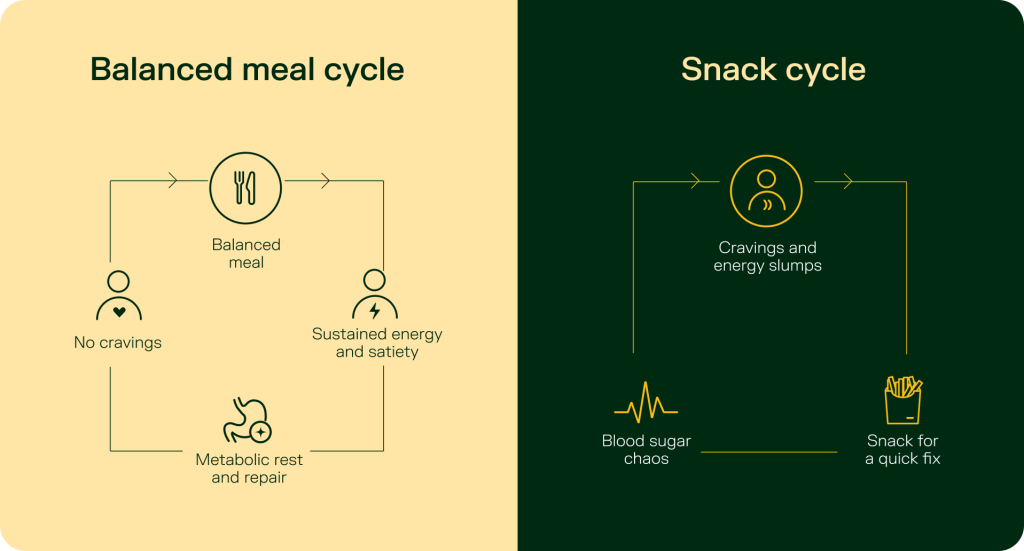
A well-balanced meal – rich in protein, fibre, and healthy fats nudges the system in the right direction. Ghrelin drops. Leptin rises. You feel full.
But snacking, especially on refined carbohydrates, high sugar or ultra-processed foods breaks this rhythm.
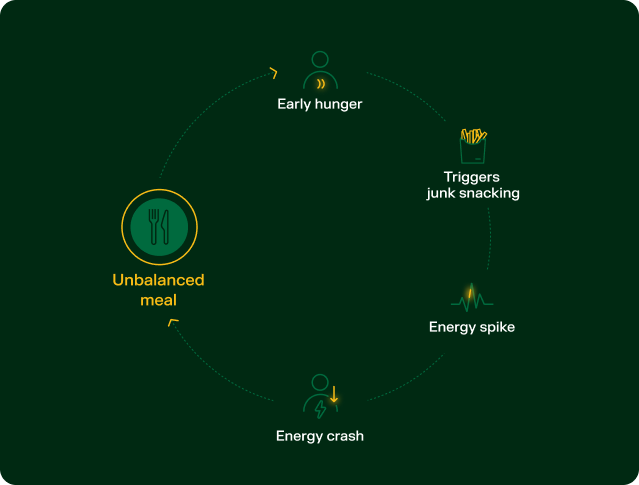
The vicious loop:
- You eat a sugary or starchy snack.
- Blood glucose spikes rapidly, a high energy burst occurs followed by a sharp insulin surge.
- Within 60–90 minutes, energy crashes.
- Ghrelin kicks in prematurely, mimicking true hunger.
- You eat again, not because your body needs the calories, but because the crash told your brain you’re “hungry.”
The more you snack, the harder it becomes for the body to identify hunger cues.
Your body has a circadian rhythm, an internal 24-hour clock that governs sleep, hormone release, and metabolism. At night, melatonin levels rise to induce sleep. However, late night snacking can affect the release of this hormone, since the snacks keep the digestive system engaged.
This hormonal disruption leads to several negative consequences:
- Melatonin reduces insulin secretion, making it harder for your body to manage blood sugar efficiently.
- The result: higher post-meal glucose levels, impaired fat burning, influx of calories and increased metabolic stress.
This effect is magnified in people with variants of the MTNR1B gene, which is linked to a higher risk of type 2 diabetes. In simple terms, your body is not designed to process food when it’s trying to wind down. Snacking at night doesn’t just affect sleep, it undermines glucose control and long-term metabolic health.
The hidden damage of a “small” bite
Snacks often look harmless because they’re small. However, they place a significant burden on our metabolism.
Your body is designed to alternate between two states:
- Eating (fed) state: where digestion, nutrient absorption, and glucose metabolism take place.
- Fasted state (until next meal): the state that occurs after digestion is completed and nutrients are absorbed. If eating is continuous or erratic, the fasting window shrinks.
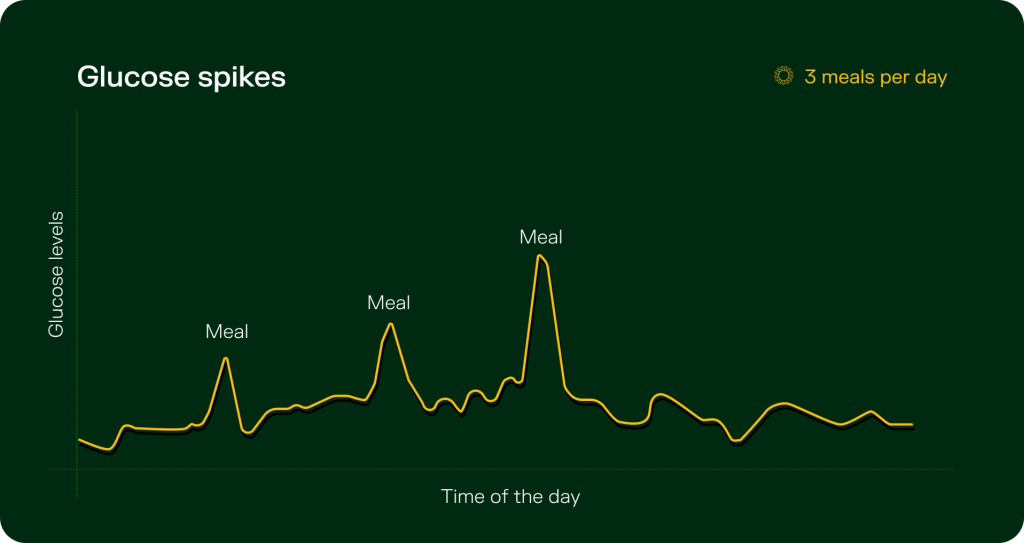

Biological consequences of frequent snacking
- Constant insulin spikes: Every time you eat, your pancreas releases insulin to manage blood sugar. Frequent snacking keeps insulin levels chronically elevated, which can impair your body’s sensitivity to the hormones over time and promote fat storage.
- Digestive disruption: Your digestive system never gets a break. This can lead to bloating, discomfort, and a less efficient gut.
Put simply: it’s not just about what you eat. It’s when and how often. Frequent snacking keeps your body in a persistent state of metabolic response, with no time to reset, clear, or recover.
Health impacts of snacking
Obesity and body weight
Regardless of the food choice, snacking adds to your total daily calorie intake and promotes fat storage. This pattern of eating frequently keeps insulin levels elevated, signalling your body to store fat rather than burn it for energy. Over time, this constant energy surplus, fuelled by “harmless” bites between meals, is a direct path to weight gain and obesity.
Cardiovascular health
The effect of snacks on cardiovascular health can depend on the type of snack itself. Sugary foods, artificially sweetened drinks, and processed meat increase cardiovascular risk.
Snacking is tied not just to frequency, but to food quality:
- Sugary snacks, ultra-processed foods, and artificially sweetened beverages are associated with higher triglycerides, LDL cholesterol, and markers of vascular inflammation.
- Processed meats have been linked to elevated blood pressure and adverse lipid profiles – both risk factors for cardiovascular disease.
Metabolism
Frequent snacking elevates blood sugar and increases diabetes risk, while fewer, larger, fibre-rich meals offer better control. Late night snacking reduces fat burning in the night.
Blood pressure
High-sodium (salty) snacks – common in packaged and processed foods – are a major driver of elevated blood pressure, especially among adolescents and young adults. Frequent intake contributes to:
- Increased vascular resistance.
- Higher lifetime risk of hypertension and cardiovascular strain.
Plan your meals
Breaking the snack cycle is not about willpower. It’s about meal architecture. The goal is to build meals that are so nutritionally complete, that your body no longer sends out hunger alarms for snacking.
Use this simple structure as your daily anchor:
The “my plate” meal
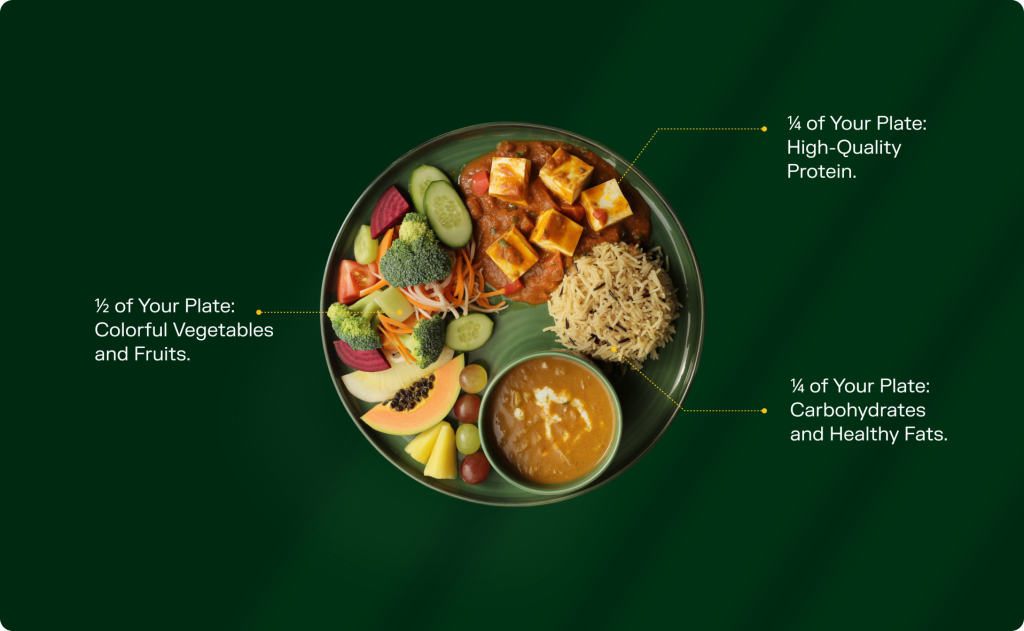
½ Plate: vegetables and fruits
Focus on fibre-dense, non-starchy vegetables – think leafy greens, cruciferous vegetables, colourful seasonal varieties.
- Why: Fibre delays gastric emptying, supports gut motility, and promotes satiety.
- Tip: Prioritise vegetables over fruit to keep sugar intake low, especially if insulin resistance is a concern.
¼ Plate: high-quality protein
Protein is the metabolic backbone of fullness (satiety). It triggers satiety hormones, slows digestion, and stabilises glucose.
- Include: Eggs, poultry, fish, paneer, tofu.
- Note for vegetarians: Plant-based meals may lead to quicker hunger because of the difference in the type of proteins, carbs and fats in these two food sources. Pay attention to both quantity and completeness of protein, and pair with fibre to extend satiety.
¼ Plate: complex carbohydrates + healthy fats
Whole grains (like quinoa, oats, millets, or brown rice) and healthy fats (like nuts, seeds, avocado) provide sustained energy without the crash.
- Whole grains are rich in indigestible fibres that feed gut microbiota and regulate blood sugar.
- Fats slow glucose absorption, improve nutrient uptake, and extend fullness.
A balanced plate provides the body with all the energy it needs to function optimally until the next meal. The urge to snack will naturally fade.
Break the habit. Reclaim your meals.
It’s time to see snacking for what it is: a sign that our main meals are not doing their job. Unconscious, habitual snacking forms a feedback loop that can contribute to weight gain, metabolic slowdown, and chronic inflammation.
The answer is not to “snack smarter.”
It’s to eliminate the need to snack at all.
Try this: One week. No snacks. Just real meals.
Build three complete, balanced meals each day – using the structure outlined above.
- Don’t keep snacks at home or at work.
- Don’t plan for them.
- Let your meals prove they’re enough.
While regular snacking is often discouraged for metabolic health, there are cases where it becomes essential. Individuals with gut conditions that impair nutrient absorption, certain autoimmune diseases, or those following therapeutic diets like anti-inflammatory or antifungal protocols may need to snack to maintain energy and prevent flare-ups. The same applies to people with diabetes or hypoglycaemia, where keeping glucose levels stable is critical. Snacking can be an exception during pregnancy or lactation, provided its checked with the doctor.
The type of snack matters. Avoid ultra-processed, sugary options. Instead, combine protein, healthy fats, and fibre to reduce glucose spikes and support sustained energy.